
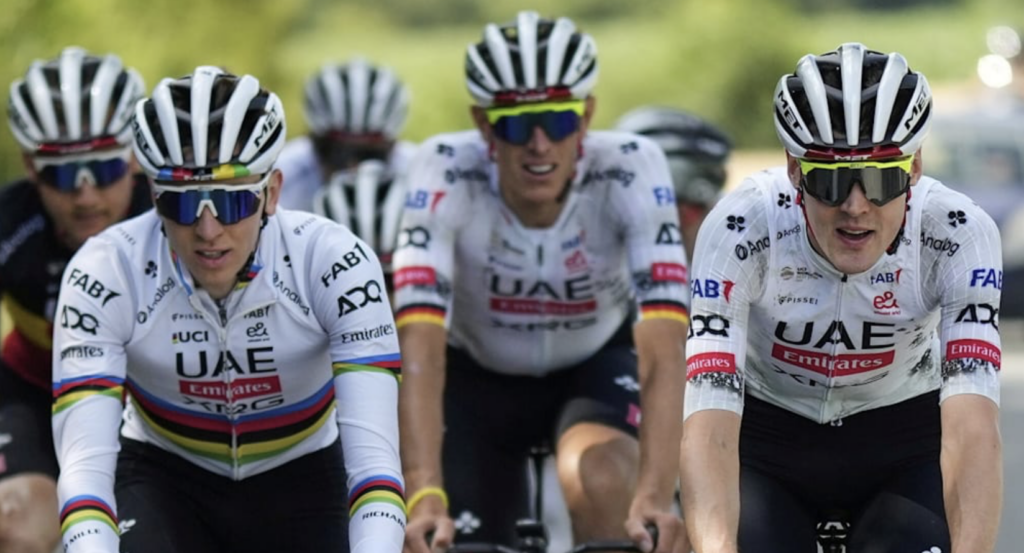
The Tour de France is one of the most prestigious and iconic sporting events in the world. Held annually since 1903 (with interruptions during the World Wars), the Tour spans over 3,000 kilometers across France and neighboring countries. It tests the endurance, strategy, and teamwork of the world’s top cyclists. Yet in recent years, a growing number of fans and commentators have voiced concerns that the race has become increasingly predictable and, some would argue, boring. Much of this sentiment is tied to the rise of the UAE Team Emirates and their superstar rider, Tadej Pogacar.
The Rise of UAE Team Emirates
UAE Team Emirates, originally launched as Lampre-Merida, has undergone a transformation since it was taken over by new sponsors and rebranded in 2017. With significant financial backing from the United Arab Emirates, the team has rapidly evolved into one of the sport’s dominant forces. The influx of funds allowed them to attract top talent, invest in cutting-edge technology, and develop a comprehensive support infrastructure that few teams can rival.
Tadej Pogacar, a Slovenian phenom, burst onto the scene in 2019 and took the cycling world by storm. He won his first Tour de France in 2020 at just 21 years old, becoming the second youngest winner in the race’s history. He repeated the feat in 2021 and continued to dominate in subsequent seasons. His all-around capabilities—climbing, time-trialling, descending, and tactical racing—have made him an almost unbeatable force in the peloton.
Why UAE Dominance Feels Boring
Dominance in sport is a double-edged sword. On one hand, it represents excellence, discipline, and peak performance. On the other hand, sustained dominance by a single team or individual can sap the unpredictability and drama that make sports thrilling. The UAE Team Emirates, through their strategic depth and Pogacar’s sheer brilliance, have neutralized many of the race’s usual tensions.
Predictability in Results
Gone are the days when fans would wait anxiously for key mountain stages or time trials to shake up the General Classification. With UAE’s strategy, the outcome often feels predetermined. Pogacar is capable of attacking early and often, leaving rivals gasping while his team controls the peloton behind him. This has led to a lack of suspense, especially in the latter stages of the Tour, where the yellow jersey seems more like a formality than a prize yet to be earned.
Lack of Real Contenders
Jumbo-Visma, INEOS Grenadiers, and a few other squads have tried to mount credible challenges, but injuries, tactical errors, or simply being outclassed have thwarted their efforts. While Jonas Vingegaard offered a stern challenge in 2022 and 2023, his efforts have only sporadically disrupted UAE’s dominance. Without a consistent rival who can match Pogacar in all terrains, the Tour begins to resemble a coronation rather than a contest.
The Pogacar Factor
Tadej Pogacar is undeniably a generational talent. His charm, humility, and attacking style should make him a fan favorite—and for many, he is. However, his consistency and superiority sometimes have an alienating effect. When a rider can seemingly do anything—drop rivals on a climb, dominate a time trial, and sprint with panache—fans start to wonder if the playing field is level.
His performances border on the supernatural, prompting comparisons to “extraterrestrial” feats of the past, such as those by Lance Armstrong (whose reign, of course, ended in scandal). While there’s no reason to suspect foul play with Pogacar, the sheer scale of his dominance makes some fans skeptical and disengaged.
Is the Tour Really Boring?
To say the Tour de France has become boring may be an overstatement. The race still features incredible landscapes, high-speed drama, heroic breakaways, crashes, comebacks, and heartwarming human stories. Riders from all teams still battle for stage wins, the polka dot jersey (King of the Mountains), green jersey (best sprinter), and white jersey (best young rider).
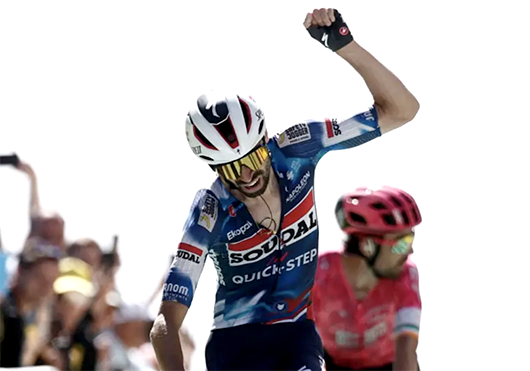
Yet, the General Classification—the battle for the yellow jersey—is undeniably the Tour’s main narrative, and when that narrative is too predictable, it dulls the overall excitement. Fans crave rivalry, narrative arcs, and the uncertainty of outcome that makes for great sports drama. The dominance of UAE and Pogacar has flattened this aspect of the race.
Financial Inequality and the “Team Sky Effect”
UAE Team Emirates has essentially taken over the mantle from Team Sky (now INEOS Grenadiers), who were the dominant force in the early 2010s. Just like Sky, UAE’s success is rooted in overwhelming resources. They can afford the best riders, nutritionists, coaches, equipment, and logistics. This has led to calls for budget caps or other regulatory changes to level the playing field.
In football, we see similar issues with superclubs dominating domestic leagues. In cycling, where teamwork is essential and budgets affect everything from rider recruitment to marginal gains in performance, financial disparity plays a crucial role.
When a few teams dominate due to deep pockets, it undercuts the romanticism of the underdog story—a key ingredient in keeping fans emotionally invested.
The Role of Race Organizers
ASO (Amaury Sport Organisation), the body that runs the Tour de France, has tried various strategies to make the race more exciting. Route designs now often include shorter stages, steeper climbs, and more punchy terrain to encourage aggressive racing. These tweaks have created some moments of excitement, but they haven’t been enough to overcome the overwhelming advantage UAE holds.
More radical solutions have been floated, such as introducing gravel stages, team time trial handicaps, or even more technical descents to test different skill sets. However, these also introduce safety concerns and don’t address the root imbalance.
What Needs to Change? The thought of one dude only. 🙂
If the Tour is to recapture its sense of unpredictability and drama, several changes could be considered:
- Team Budget Caps: Introduce limits to how much teams can spend on rider salaries, equipment, and support staff. This would prevent super-teams from forming and dominating through sheer wealth.
- Smaller Teams: Reducing the number of riders per team from eight to six or seven could lessen the stranglehold of dominant teams and increase unpredictability.
- Revamped Points System: Create incentives for attacking riding and stage wins rather than just defensive tactics aimed at preserving the GC lead.
- More Time Bonuses: Award time bonuses more generously at intermediate sprints and stage finishes to encourage aggressive racing.
- Technical Innovation Oversight: Level the technological playing field by setting standardized equipment guidelines.
Conclusion
The Tour de France remains a breathtaking spectacle and an unmatched test of human endurance and will. Yet the race risks losing its narrative spark when one team and one rider dominate so completely. UAE Team Emirates and Tadej Pogacar exemplify what is possible with talent, strategy, and resources—but they also represent a challenge to the sport’s competitive balance.
For the Tour to remain compelling year after year, it must evolve to ensure that all riders and teams have a genuine chance at glory. Only then can the race retain its magic and continue to inspire awe, suspense, and wonder in fans around the world. Until then, while we may marvel at Pogacar’s extraterrestrial abilities, we also long for a battle among equals that keeps us on the edge of our seats.
This is just one guy’s thoughts—raw, unfiltered, and needing to get out of my head. Sometimes things build up, and if I don’t let it out, I’ll explode. So here it is. I’m not claiming to be right, and I’m not trying to start a movement. I’m just trying to make sense of the mess I see and feel. Why this? Why now? Because something about where we’re headed, how we act, and what we prioritize doesn’t sit right with me. It’s not polished, it’s not planned—it’s just what came crashing through my brain when I couldn’t sleep. Maybe it’ll matter to someone. Maybe it won’t. But it matters to me, enough to put it down in words. Sometimes a rant is the only way to clear the fog, to understand what the hell’s really going on inside. So yeah—take it or leave it. This is my release.
Thanks for taking your time gals and guys…